Adopt
a FROG
Reintroducing the Cascades Frog to Lassen Volcanic National Park
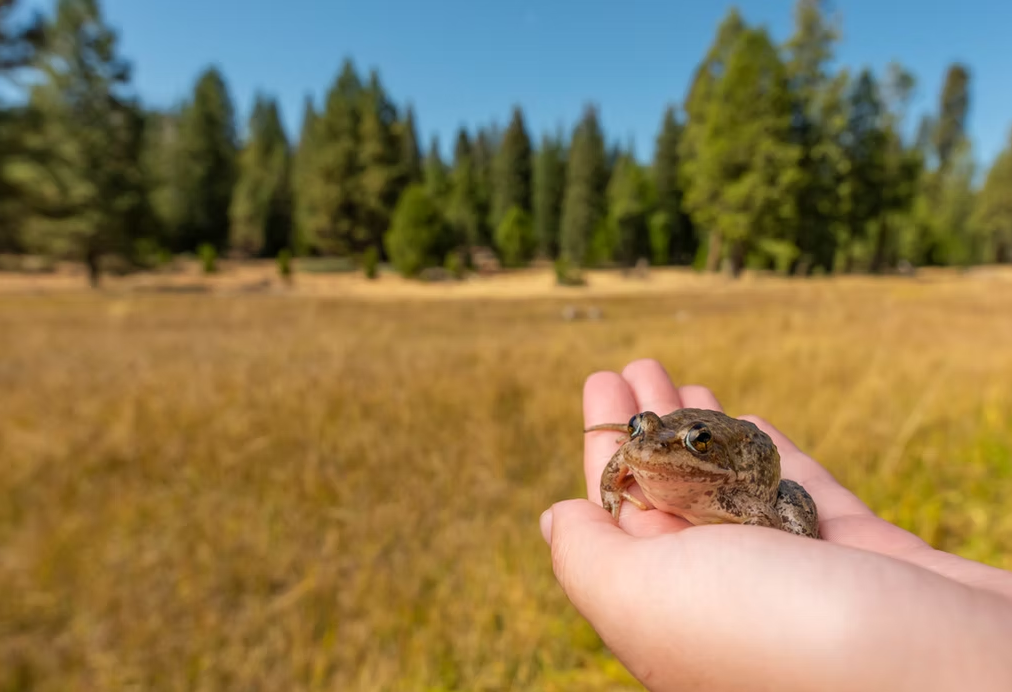
Cascades frogs (Rana cascadae) are found in wet meadows and glacial lakes across the Cascades Mountain Range from northern California to northern Washington. The Cascades frog is a medium-sized frog about the size of a small avocado. They are brown in color, with inky black spots on their back and legs, and a cream-colored upper lip and belly (Figure 1). Cascades frogs live in high elevation glacial lakes and wet meadows between 2,600-9,000 feet. They hibernate underwater during the winter and emerge in the spring to breed. Tadpoles metamorphose into froglets after just four months.
-
Your symbolic adoption makes a difference by:
Supporting park monitoring of Cascades frog populations at Lassen.
Helping to educate the public about the Cascades important role in Lassen’s ecosystems and threats to its survival.
-
Records suggest that Cascades frogs were once abundant in Lassen Volcanic National Park. One biologist writing in 1930 described one frog for every meter around Emerald Lake. Unfortunately, the introduction of non-native fish and a deadly fungal disease caused the Cascades frog to decline throughout its range and become extinct in Lassen Volcanic in 2007. Because of these declines, the Cascades frog is a candidate for state listing under the California Endangered Species Act.
Field scientists to complete annual surveys and conduct climate change-related research.
Current research in cooperation with the USGS and NPS Wildlife Health Branch on trying to determine the impact plague might have on the pika. This project involves trapping and combing for fleas, then testing the fleas for plague.
-
In 2025, biologists from Washington State University, the National Park Service, the US Forest Service, and private companies reintroduced the Cascades frog to Lassen Volcanic National Park. To give the reintroduced frogs the best chance of survival, biologists bathed them with an antifungal medication (Figure 2, 3). Research suggests that these baths can reduce infection, increase survival, and help to stop population declines. The goals of this project include reestablishing self-sustaining populations of Cascades frogs in historically occupied habitats in Lassen Volcanic and investigating the interaction between habitat and disease impacts. This research will form the basis of a recovery plan for the Cascades frog and inform reintroductions in other parts of its range.
-
Biologists use a technique called capture-mark-recapture to track frog population size and survival (Figure 4). By recapturing frogs, biologists can also track their health status and swab them for disease (Figure 5). This data allows scientists to understand how changing environmental conditions could be impacting frogs.

Adopt A Frog
Records suggest that Cascades frogs were once abundant in Lassen Volcanic National Park. One biologist writing in 1930 described one frog for every meter around Emerald Lake. Unfortunately, the introduction of non-native fish and a deadly fungal disease caused the Cascades frog to decline throughout its range and become extinct in Lassen Volcanic in 2007. Because of these declines, the Cascades frog is a candidate for state listing under the California Endangered Species Act.